Saturday, November 2, 2013

Two MisAccusals Compared - Lee Child / Andrew Gross


My sister sent me a popular author’s book recently and I started reading it at the same time as I began reading another NYT Bestselling Author.!  The titles matched so neatly, as well as the attempted plot lines, that I thought I would review them in comparison (both 2013 pubs; sizes: 339 pgs vs. 400 pgs).

 = = = = = = = = = = = = = = = = = = = = = = = = = = = = = = = =

Lee Child has done many of these Jack Reacher novels, so the opening can be slow, with an assumption that 60% of the readership is simply familiarizing themselves with his character traits.  It’s much like an opening to another Bourne novel adaptation starring Matt Damon would be, should there be such a thing.  Reacher is the archetypal white knight, modernized: 6’4” 240, a solid six-pack, and the epitome of a modern fighter.  He is impervious to pain, fearless in battle, and knows exactly the right moves to do whatever is the necessary damage called for.

He, and his heroine, are mis-accused of various crimes, which the unfolding of the plot will clear them of.  In this book, the plot builds inexorably, up to the end.  There are fight scenes with our hero, and they get better and better.  There are sex scenes with our heroine, and they get steamier and she gets sexier.


I’ve highlighted above, several of the differences between the approaches each of these authors have taken. 

The Gross book moves at a relentless speed for 30-40 pages.  The reader can’t believe this pace can be sustained: and it can’t.  The pace drops off to, .. plodding – but, fear not, the pace rockets to a welcomed and well-deserved high again at the end.

In the meantime, there’s the poor-writer filler of research material that, alas, couldn’t be fitted into dialogue.

There’s the plot-line development that was inadvertently disclosed too early;  which, in turn, caused the reader to go into “skim-mode” periodically, for 4-8 page skims, to keep the reader’s attention sustained enough to keep going. 

We did, however, continue, because this was a good book; not a great book, but these are not loveable characters. 

I’d enjoy the company of Reacher & Turner (left) at Thanksgiving Dinner; but not Bachman and Gould, each from suspect roots.

Tuesday, October 22, 2013

Room by Emma Donoghue


I read this book, from cover to cover, in one day, about four to six hours.  Plotline and characters were well established in the 40+ page first chapter, “Presents”.

I read all of those words. 

I sped-read the second chapter, another 40+ pages titled, “Unlying”.  That clarified the subplots and outcomes to dominate the rest of the book, which I then scanned at light-speed, confirming that, only what was predictable made it to the printed page.

btw: I assume that this was a screen play, which some editor convinced the author to expand into a novel. 

There was a lot of stretching on this expansion project like extraneous spacing and blank pages.  Of course the biggest holdover from the screenplay was the preponderance of dialogue over protagonist narration.  Of course it’s hard to do thoughtful narration coming from a young 5-year-old.  The author did an exemplary job with this 5-year-old voice for the book.

However, while plaudits are in order for a great textbook example of well-developed control over the narrator’s voice, the book had insufficient merit, for me, to read with the thoroughness required such that:

1)  My belief in the story was not suspended to the point where I could empathize, or even care about the characters.

2)  My world view was not enhanced.

3)  I didn’t find the Book entertaining; actually it was a bit exploitive and sick.


I think it’s a good book to recommend to my shrink friends, who might relish the deep personality nuances explored in a book that takes place in a single room with a back-story that has gone on for seven years.

Unfortunately, the book will mostly be popular with reader’s who are also riveted with headlines like, “more playground shootings: film at 10.!!”  Many will be unable to resist the loveable naiveté of a five year-old, undamaged by our reality world; and be unable not to totally sympathize with a successful mother protecting her child under the most heinous circumstances.


A real tear-jerker – the movie will be much better than the book:

Because:

n  We can achieve instant hatred for the mean, ugly villain, and instant respect for the beleaguered, beautiful mom.

n  The big screen won’t give us claustrophobic anxiety about the Room – the boy will look small and the mom will look normal.

n  There’ll be more balance between world/room-views – much more focus on adult interactions rather than toddler’s thought processes.

Tuesday, October 15, 2013

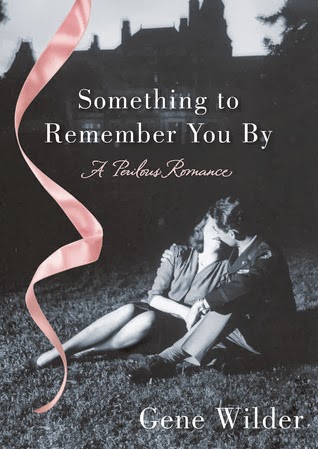
Something to Remember You By by Gene Wilder


This is a delightful story.  He’s not a professional writer, so there are many things “wrong” with the short story.  But it’s short, and a nice story, and he’s Gene Wilder, so it’s worth the read.

I’m putting it back in the library today.  It’s a “new” book, so it will go back on to the new shelf.


Tuesday, October 1, 2013

The Brief Wondrous Life of Oscar Wao


Thank GOD we are back to normal.!!!

Not that this was a hateful book,!! Especially not if one is an ex-DR-patriot, living in America because no where/no one else in this world would have you: and you had a story that might only be interesting to a few dozen Cabral family members; but otherwise, mind-numbingly boring to 99% of the “normal” book-reading population.

btw: I assume the overlaid picture to the left was Ybón: any agreements or objections? 
 
The anger in this book is palpable, acceptable for someone dumped into a ghetto across the Hudson River from the greatest City in the World: into the darkness of places such as Passaic, Elizabeth, and Jersey City. Who wouldn’t be angry.  This was the armpit of America. Welcome.!!

I almost bought into this “American Dream” when recruited to “emigrate” from England at a point where I had fully matriculated into English-nish.  “We” (I) had picked out a house in Parsippany, then the whole family visited to see our workplace as well, Morristown.  GOD intervened, by providing an over-night ice-storm, which shattered the wind-screen of our rental car and rattled me away from the New Jersey home comforts.  I share Díaz’s discomfort.

This is more Yunior’s story, with Oscar as comic/dramatic relief.  Yunior should have got a job with a local waste disposal company in Jersey City.  Why aren’t the Italians hiring the DRs anyway?  Their patois would match up perfectly.

We’ve had local foreign language before, in plenty of book club selections: we never like it!  Being foreign, by definition, means we don’t understand it, and are forced to learn it, just to understand the book’s premise.  It’s arcane to learn so much about Patterson, New Jersey DR argot.  This is the first book, and on a library recommendation list (!), that has so much PC-unacceptable language and down-right filth, as a key-part of the story.

O.K., Why did Dias write the book?

He wanted to move up from Jersey City to NYC.  Who wouldn’t?  And he did!

Those white, wine-swilling, elitist Barnard/Bryn Mawr book editor snobs ate him up like that season’s latest look in plaid jumpers or poodle pup lapdogs.  They, an hour north of Mecca, picked out an unwashed; an hour south of same, and displayed him for the winter 2008 season.  Junot (Yunior) enjoyed the seasoning from the blanca puerca and got his flat in the Bronx.

“Hey, Bro, K-no?”

Monday, August 19, 2013

Sweetness at the Bottom of the Pie by Alan Bradley


Finally – late as it is into 2013 – A Good Read !! !!  ---

endearing - loveable - suspended my disbelief - gave us AARPers a wake-up call.

OK, so why did Alan Bradley take the time to write this book?  And did he see it as a series from the beginning.? – age 11 to 19, just like Harry Potter, maybe even a prequel at 9, and a postquel at 26.

“If only I had my life to live over again, how would I change it.?  -–  what would I do differently.?  What if I had  advantages – special powers.?”

I.E., it’s who he wanted to have been.  And why not.  Reverie.

We readers love her so much that we ignore her excessive use of adjectives and adverbs, “It’s OK, because it’s an eleven year-old’s writing.”  Ditto the fact that she’s got an amazingly well-educated knowledge about Chemistry, Arts, History, Psychology, and Philosophy.  Not from daddie did she obtain this knowledge, nor mommie; not from the town library, nor from her sisters; not even from her faithful family retainer.  She got it all due to her handicap: not a mentor.

When I was 10-11-12 years old, 5th-6th-7th grades, I had mentors galore.  I turned 10 on my family’s migration west from Michigan to California: new schools, new friends, and new directions.  I mowed my math teacher’s lawn in exchange for geometry lessons; had a memorable boy scout leader, learned swimming at the YMCA; read Thomas Wolfe for book reports, and was the leader of my church’s youth group.  In those three years I went from being the tough-guy stranger from Detroit; through being a prodigy and teacher’s pet; to being a sometimes leader, sometimes outlier.  But I had scads of mentors, pushers, and draggers.  Flavia seems to do it all on her own.

I recently read an article in Jan 2013 of The National Geographic titled “Restless Genes” written by David Dobbs.  This was a fascinating magazine article. Researchers have identified a variant of the "DRD4" gene called the DRD4-7R, which is found in 20% of people.

"Dozens of studies have found that the gene

  makes people more likely to take risks and

  generally embrace movement, change, and adventure."

This is probably why I have led my life the way I have {many wives; lengthy stays abroad}, and possibly why my parents were driven to move west after the war; also possibly why my daughter does the same sorts of things. 

Maybe Flavia’s got this -7R gene variant.

Sunday, June 30, 2013

Born To Run (or not) by Christopher McDougall


Here we go with another journalist.  Those readers who drift more towards non-fiction are probably appreciative of the research-laden books that journalists publish.  Everything you always wanted to know about, in this case, ultra running, all condensed, to an extent, in one book. 

In my case, I prefer fiction, which can benefit from good research, as seasoning; but does not become the main entrée for a meal.  All the way through this book, I pictured the author, not participating in yet another screwy running event; but rather sprawled out like I am right now, in front of my computer, digging up vignettes from the Internet and printing them all out until the author had scores of human interest blurbs from all around the world related to running.  Then he wove them together into a cohesive a story as he could muster.

So, for me, this sort of book has to balance the research with a pervasive plot line.  Many of our journalist books these past few years did a good job of this:  Henrietta Lacks had good balance and a plot that carried; Sanctuary of Outcasts carried the plotline, but it was an evil one.  Bliss by Eric Weiner and Nothing to Envy by Barbara Demick are my epitomes of bad balance.  Demick at least tried with a bad subject; Weiner didn’t even try to make sense of his “old stories”.

Ultra Running

No one knows anything about it.!.!

No one cares about this arcane subject.!.!

Why not.?.?  ---  because it’s boring.!.!.!


I like to talk about “take-away”-s from a book experience: lessons learned; knowledge gained; improvements to my lifestyle, diet, knowledgebase, personality, skill set, love life, handling of interpersonal relationships.

What came to mind in review was:

-     Run barefoot

-     Eat vegetarian

The problem is, the author didn’t do either.  He didn’t walk the walk.

He wore big boots or $200 running shoes all the time.

He ate like a fully-fledged carnivore, an American carnivore at that – red meat with processed food supplements.  YUK.!.!


Did I sympathize with him in the “Big” race ? ---  NO.! ---

He seemed like a big, fat slob that deserved to take 12 hours to complete what other did in 6 hours.

Saturday, June 8, 2013

The Weird Sisters


They’re not weird at all.

These sisters are perfectly normal.

The author seems to be exploring her own fantasy world of what could/should/might have been in her life.  Perfectly viable territory, but in a novel of one’s own life, we wind up in dream-land, with happy endings for all concerned, and not too many moral resolutions.  I hesitate to use the words, … .. woman’s writing.  I stand for this opinion, as a male, with characterizations of: vapid, endlessly chatty, and oft-times purposeless.  To be balanced, men are often: vulgar, brusque, and are most-times into (war, sports, and themselves); and that’s men’s writing, which, being a man, I like better than women’s writing.  But that doesn’t mean one is better or worse than the other: just that each of us has our own.  No different than, we don’t read, and thus not like [or dislike] Pakistani or Portuguese literature either.


I read this as an autobiographical treatise on the author’s split personality, as exemplified through the three sisters.  Who is speaking, as if it is not a single voice, but rather representing all concerned. ?

There are no sisters.!  It’s a single voice; a clearly unchanging single voice.

It is the voice of the author’s self, with the three sister characters’ lifestyles that she envied, wished for, but never actually experienced for herself.  This is not a, “Hey, this is how I grew up, but I changed the names” type of story.

These characters are extremely composite and will each come out -1-, -5-, or -10- on a 1-10 scale of things like “free spirit” [Cordy-10; Bean-5; Rose-1]  or like responsibility [Cordy-1; Bean-5; Rose-10], ie, Cookie-cutter characters.

Trying to move on from the characters, we run into the same problem with the plot line(s).  The author is pacing the book to wind up in Nirvana for all characters involved.  Now, life doesn’t improve everyone’s lot by the same amount each day, but here we find that strangely, everyone’s current and future situation seems to progress evenly, sustainably, and uniformly from the day they come “home”.  It’s the magic elixir: generally LOVE, but with a mix of: purpose for Bean; companionship for Cordy; and Faith for Rose.  All these things are of course of biblical origins: Faith, Hope, and Charity.

As a book club title, and in the continuing interest of the library readership, this was an OK book.  Nouns and verbs are in the right places.  Some sort of plot line advanced periodically.

For our sort of book, this met the minimum standard, but it dwelled for long periods in the fantasy region of the truly weird, to make a pun.