Monday, December 2, 2013

State of Wonder (Revisited)


This book is a lesson in the craftsmanship of writing.  Patchett’s earlier book, Truth and Beauty, convinced me of the belief that her writing was penned by the hand of a grandmaster.  The opening chapter of this book is my case in point.  She writes a vignette about announcing her lab-mate’s death to his wife.  It’s a side issue but it allows her ample time to introduce all the characters and many of the plot lines without any expenditure of effort.  It’s like the chess game opening of P-Q4, perfectly solid, but a bit edgy, hinting at more than the normal challenges.

The next chapter continues at the leisurely pace of the first; no apparent hurry.  She paints in the back-story on Marina Singh, her MD career destroyed by a horrible error of judgment while doing her residency.  This is brilliantly handled through the device of her malarial-like delirium while asleep.  She dwells excessively on death and separation in her nightmare.

By almost halfway through the book, it is obvious that the real story is not about a “Rumble in the Jungle.”  That was just a literary device.  We’ve had 150 pages of exquisite character development.  Patchett adds three new characters with every chapter, never letting go of the rest.  It’s like a juggler’s act, adding in an additional ball, again and again, from 3 to 6 to 9.  The author keeps adding to the depth of the initial personae: Marina, Mr. Fox, and Anders.  She doesn’t let loose of Karen or Annick either.  A deep look at her mid-life crisis also includes Milton, Jackie, and Barbara. They round out her pre-jungle cast of characters.  Her waking moments of thought, like her nightmares, are all about paths taken, or not.

Just before they take off down the Amazon, there is a  “makes-you-wanna-go” description of Manaus.  She adds several more characters here, Tomo, Easter, and Nixon, all while still keeping up the threads with all the others.  It has become noticeable this deeply into the story that Marina only reacts to people and circumstances, she does no self-direction of events or activities.  She is a feather blowing in the wind: afraid to make decisions of her own.  She yields to Mr. Fox her older, married boyfriend, Dr. Swenson her Med School mentor, even Barbara her style guide.  Are they all parental figures like Milton?  Did she never take control of her child-parent relationship?

Into the thick of it at the Lakashi village, sharing their anthropological mores, everything wildly alien, the author again takes the time to delve into human individual differences; not with graphical moments and impossible flora and fauna; not with fearful creatures: spiders, snakes, birds and bats.  The reason I claim we are reading master craftsmanship in the written word is captured in her relating the scene where the tribespeople scam Marina out of her clothes – the shirt off her back, willingly.  Patchett captures the aversion most of us have to a stranger unbuttoning and striping off our shirt and trousers: the titillation of having a community watch as her breasts are fondled, as the natives think of maybe getting away with the bra as well.  Not a lot of adjectives and adverbs in this scene, but we are Marina: No!  O.K., no, yes, as she succumbs to their probing – yielding to the communal will.

The penultimate chapters deal with the half dozen moral questions that are brought up by the premise of the novel: the search for pharmacology as product; the marketing of said product; the impact on indigenous people of the search; the resolution of mid-life crisis by Marina Singh.  None of these ethical dilemmas receives any attention by the author until these moral chapters, where they are all vocalized: argued from all sides, and then positions are taken: malaria cure or menopausal avoidance: free cures or designer drugs or psychedelics; exploitation private or public; Life Part 2 safely as before or challenging the unknown.

Well, you don’t get rich off of masterful character development.  Ann Patchett has tossed in a pinch of comic-relief:
“Annick Swenson’s child will be raised by the Lakashi?!”  /../  “You went to Radcliffe!”
“If we were home I would take him for a CT.”
“If you were home he wouldn’t have been squeezed by an Anaconda!”

And that last line refers to a lengthy struggle between all our friends and an 18-foot Anaconda, won by Marina Singh.
There are several other moments of thriller intensity, but all this is nothing compared to the depths-of-despair / heights-of-glory final chapter where good and evil finally struggle.  Evil represented by the cannibalistic Hummocca tribe next door.  They usually shoot poison darts first, and then eat the dead.  Good is represented by our heroine, at last making her own decisions.  Pirating the pontoon boat, she goes with the boy Easter to the lair of the Hummocca.  There, as suspected, she finds Anders Eckman, hale and hearty and not dead which was the reason in the beginning for her trip to the Amazon.  She trades Easter for Anders, her number 2 and 3 solo decisions.  She sleeps with Anders that night back in camp and then takes him home to his wife the next day. [#’s 4 & 5].

The sixth independent decision would be going back to the jungle where she thrived, but Ann left that for us to decide.


Saturday, November 30, 2013

State of Wonder [First Read 2011] by Ann Patchett


Ann Patchett is one of those authors whose new books are automatically sent to the “top of the list” as a must read.  She’s an academic author.  She spends a lot of time perfecting plot and characters, so we only see a new work every two or three years.

This is an amazing story and a compelling read.  It’s all I can do to hold back from just reading it straight through, from cover to cover.  However, like a good Armagnac, the reading is best, when one savors it over time without guzzling.

Marina Singh is a Minnesotan medical doctor with an eastern Indian father, who abandoned her, returning to India.  She has nightmares about her childhood visits to Calcutta.  She gave up her surgical career because of a common mistake when in residency (she never watched Dr. House or Grey’s Anatomy).  At the opening, she is a lab tech with a partner, Eckman; and a quiet sexual relationship with her 20-years-older boss.  The boss sends Eckman to the Amazon; Marina’s old surgery professor reports Eckman’s death after three months.  Marina bonds with Eckman’s wife, who has every thing Marina really wants: kids, acceptance, and a stimulating life.  Marina travels to the Amazon to pick up the pieces.  She finds all those things she has been missing in her life.
 

Ann Patchett normally puts most of her attention on people and their psychology, motivations, and back-stories.  As a change of pace, Patchett has written an action thriller here, not much psychoanalysis. 

So, she has channeled Homer, using all the adventure devices we love in “The Odyssey.”  We have the Lotus-Eaters, who forget their mission preferring somatic drugs [Rapps].  We have the cannibalistic Laestrygonians [Hummocca] with yellow heads and poison darts.  We have the protective drug “moly” to resist Circe [malaria].  And of course, there’s an encounter with Scylla, the six-headed monster [Anaconda].  Marina exhibits growing strength and commitment as the story unfolds.

Patchett’s writing is tight: no meandering, no wasted words on fluff.  I appreciate the time and effort that went into scores of revisions; they were worth it.  There is never any hint of what’s going to happen next.

Marina blossoms when dropped in the Amazon jungle.  Life will never be the same.  Patchett explores the boundaries of love: for children, for a child, of a friend, and mentors; and not unlike Odysseus, the story ends when they get home.

There will be considerable temptation on the part of the movie director to turn this script into something like “Anaconda” or “Arachnophobia,” or even Tarzan.  This is not what the book is all about and it would be a shame to have the movie miss the point, while in search of some teenager-appeasing computer graphics.

Tuesday, November 5, 2013

New Earth by Ben Bova


O.K., # 1,  I have to come clean and state that I am, and have always been (since age 11), a SciFi devotee. 

Over the last half-century, I would go back periodically and try again, whoever was the flavor of the decade.  I read all of the new sub-genres.  I am a believer in the future.  I was a “Dune” freak until Herbert’s stuff was strung out too far.  Poul Anderson kept to the classic genre, but grew stale.  He was no E.E. Doc Smith, nor Heinlein.  Frederik Pohl raised the bar with the HeeChe Saga, but he, too, had just a single innovation, moving beyond Asimov, but which eventually ran dry.  Carl Sagan was the type of author that didn’t over-reach: not a SciFi writer, he wrote a great book and didn’t milk it.  Michael Crichton was another of these guys, a professional writer who takes a great stab at moving SciFi forward.  My current voice of the future is William Gibson, who may only go forward ten to twenty years, but that’s the equivalent of decades for those 30’s-50’s SciFi writers.

= = = = = = = = = = = = = = = =

Bova is a middle of the road author who has ground out over 50 books in the SciFi genre.  His ideas aren’t new, the primary premise of the book is a warning about global warming.  His secondary thrust is a plea to move away from violent solutions to the problems of humanity: no war, no hatred, no guns. 

The first half of the novel pays homage to Lost Horizon, a 1933 novel by English writer James Hilton. The book was turned into a movie, also called Lost Horizon, in 1937 by director Frank Capra. It is best remembered as the origin of Shangri-La, a fictional utopian lamasery high in the mountains of Tibet.   Hugh Conway, a veteran member of the diplomatic service, finds inner peace, love, and a sense of purpose in Shangri-La, whose inhabitants enjoy unheard-of longevity.  As in the book and movie, the others in the research expedition to “New Earth” don’t initially agree with the diplomat.  They view things from their commitments to the seven deadly sins.

The second half of the story starts with the lessons of Carl Sagan’s “Contact”.  .

A small crew of Earthlings has arrived at an impossible world after traveling 8.6 light years.  It was all a ruse their hominoid hosts admit, “just to pique your interest enough to come and have tea with us.”  “and, by the way, while you’re digging into that scrumptious scone, I’d like to also remind you and you kind that peace and serenity is good and that war and hatred is bad: so much so that your entire civilization may be destroyed if you don’t change your ways, and that’s why we’re having this little chat.

There’s an unacknowledged co-author with an undeveloped sub-plot that could lead to “New Earth II”.  All good writing – no surprises.

Saturday, November 2, 2013

Two MisAccusals Compared - Lee Child / Andrew Gross


My sister sent me a popular author’s book recently and I started reading it at the same time as I began reading another NYT Bestselling Author.!  The titles matched so neatly, as well as the attempted plot lines, that I thought I would review them in comparison (both 2013 pubs; sizes: 339 pgs vs. 400 pgs).

 = = = = = = = = = = = = = = = = = = = = = = = = = = = = = = = =

Lee Child has done many of these Jack Reacher novels, so the opening can be slow, with an assumption that 60% of the readership is simply familiarizing themselves with his character traits.  It’s much like an opening to another Bourne novel adaptation starring Matt Damon would be, should there be such a thing.  Reacher is the archetypal white knight, modernized: 6’4” 240, a solid six-pack, and the epitome of a modern fighter.  He is impervious to pain, fearless in battle, and knows exactly the right moves to do whatever is the necessary damage called for.

He, and his heroine, are mis-accused of various crimes, which the unfolding of the plot will clear them of.  In this book, the plot builds inexorably, up to the end.  There are fight scenes with our hero, and they get better and better.  There are sex scenes with our heroine, and they get steamier and she gets sexier.


I’ve highlighted above, several of the differences between the approaches each of these authors have taken. 

The Gross book moves at a relentless speed for 30-40 pages.  The reader can’t believe this pace can be sustained: and it can’t.  The pace drops off to, .. plodding – but, fear not, the pace rockets to a welcomed and well-deserved high again at the end.

In the meantime, there’s the poor-writer filler of research material that, alas, couldn’t be fitted into dialogue.

There’s the plot-line development that was inadvertently disclosed too early;  which, in turn, caused the reader to go into “skim-mode” periodically, for 4-8 page skims, to keep the reader’s attention sustained enough to keep going. 

We did, however, continue, because this was a good book; not a great book, but these are not loveable characters. 

I’d enjoy the company of Reacher & Turner (left) at Thanksgiving Dinner; but not Bachman and Gould, each from suspect roots.

Tuesday, October 22, 2013

Room by Emma Donoghue


I read this book, from cover to cover, in one day, about four to six hours.  Plotline and characters were well established in the 40+ page first chapter, “Presents”.

I read all of those words. 

I sped-read the second chapter, another 40+ pages titled, “Unlying”.  That clarified the subplots and outcomes to dominate the rest of the book, which I then scanned at light-speed, confirming that, only what was predictable made it to the printed page.

btw: I assume that this was a screen play, which some editor convinced the author to expand into a novel. 

There was a lot of stretching on this expansion project like extraneous spacing and blank pages.  Of course the biggest holdover from the screenplay was the preponderance of dialogue over protagonist narration.  Of course it’s hard to do thoughtful narration coming from a young 5-year-old.  The author did an exemplary job with this 5-year-old voice for the book.

However, while plaudits are in order for a great textbook example of well-developed control over the narrator’s voice, the book had insufficient merit, for me, to read with the thoroughness required such that:

1)  My belief in the story was not suspended to the point where I could empathize, or even care about the characters.

2)  My world view was not enhanced.

3)  I didn’t find the Book entertaining; actually it was a bit exploitive and sick.


I think it’s a good book to recommend to my shrink friends, who might relish the deep personality nuances explored in a book that takes place in a single room with a back-story that has gone on for seven years.

Unfortunately, the book will mostly be popular with reader’s who are also riveted with headlines like, “more playground shootings: film at 10.!!”  Many will be unable to resist the loveable naiveté of a five year-old, undamaged by our reality world; and be unable not to totally sympathize with a successful mother protecting her child under the most heinous circumstances.


A real tear-jerker – the movie will be much better than the book:

Because:

n  We can achieve instant hatred for the mean, ugly villain, and instant respect for the beleaguered, beautiful mom.

n  The big screen won’t give us claustrophobic anxiety about the Room – the boy will look small and the mom will look normal.

n  There’ll be more balance between world/room-views – much more focus on adult interactions rather than toddler’s thought processes.

Tuesday, October 15, 2013

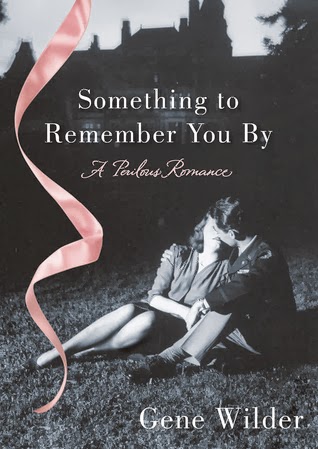
Something to Remember You By by Gene Wilder


This is a delightful story.  He’s not a professional writer, so there are many things “wrong” with the short story.  But it’s short, and a nice story, and he’s Gene Wilder, so it’s worth the read.

I’m putting it back in the library today.  It’s a “new” book, so it will go back on to the new shelf.


Tuesday, October 1, 2013

The Brief Wondrous Life of Oscar Wao


Thank GOD we are back to normal.!!!

Not that this was a hateful book,!! Especially not if one is an ex-DR-patriot, living in America because no where/no one else in this world would have you: and you had a story that might only be interesting to a few dozen Cabral family members; but otherwise, mind-numbingly boring to 99% of the “normal” book-reading population.

btw: I assume the overlaid picture to the left was Ybón: any agreements or objections? 
 
The anger in this book is palpable, acceptable for someone dumped into a ghetto across the Hudson River from the greatest City in the World: into the darkness of places such as Passaic, Elizabeth, and Jersey City. Who wouldn’t be angry.  This was the armpit of America. Welcome.!!

I almost bought into this “American Dream” when recruited to “emigrate” from England at a point where I had fully matriculated into English-nish.  “We” (I) had picked out a house in Parsippany, then the whole family visited to see our workplace as well, Morristown.  GOD intervened, by providing an over-night ice-storm, which shattered the wind-screen of our rental car and rattled me away from the New Jersey home comforts.  I share Díaz’s discomfort.

This is more Yunior’s story, with Oscar as comic/dramatic relief.  Yunior should have got a job with a local waste disposal company in Jersey City.  Why aren’t the Italians hiring the DRs anyway?  Their patois would match up perfectly.

We’ve had local foreign language before, in plenty of book club selections: we never like it!  Being foreign, by definition, means we don’t understand it, and are forced to learn it, just to understand the book’s premise.  It’s arcane to learn so much about Patterson, New Jersey DR argot.  This is the first book, and on a library recommendation list (!), that has so much PC-unacceptable language and down-right filth, as a key-part of the story.

O.K., Why did Dias write the book?

He wanted to move up from Jersey City to NYC.  Who wouldn’t?  And he did!

Those white, wine-swilling, elitist Barnard/Bryn Mawr book editor snobs ate him up like that season’s latest look in plaid jumpers or poodle pup lapdogs.  They, an hour north of Mecca, picked out an unwashed; an hour south of same, and displayed him for the winter 2008 season.  Junot (Yunior) enjoyed the seasoning from the blanca puerca and got his flat in the Bronx.

“Hey, Bro, K-no?”